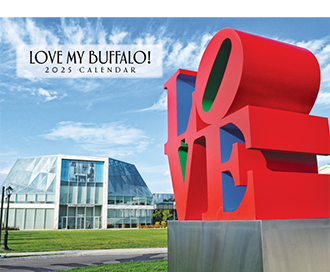
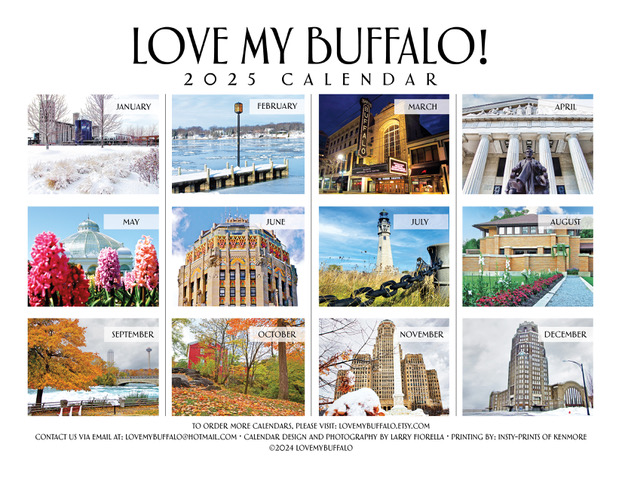
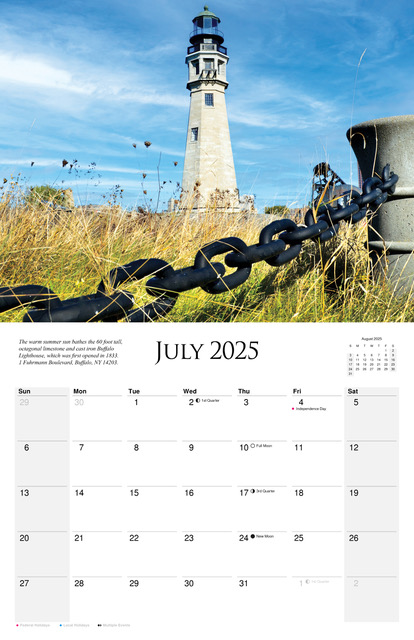
Celebrate Buffalo all year long with a beautiful 2025 Love My Buffalo! calendar! A great gift for those who live in Buffalo AND for those who wish they did.
This 8.5″ x 11″ Wall calendar opens to 11″ x 17″. Shrink-wrapped with hole punch.
$18.95
Out of stock
Celebrate Buffalo all year long with a beautiful 2025 Love My Buffalo! calendar! A great gift for those who live in Buffalo AND for those who wish they did.
This 8.5″ x 11″ Wall calendar opens to 11″ x 17″. Shrink-wrapped with hole punch.
You must be logged in to post a review.
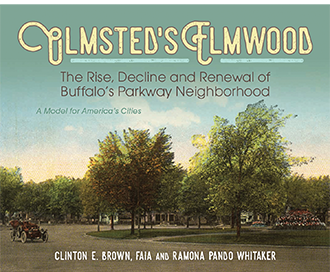
The fascinating story of the historic Elmwood District is told for the first time, from the arrival on the Niagara Frontier of Joseph Ellicott, through the role played by Frederick Law Olmsted’s parks and parkways, and into the decline and renewal during the modern era. This lushly illustrated book educates and enlightens, telling the stories of the people who gave Elmwood its enduring character, transforming it from dense forest into one of America’s top ten neighborhoods.
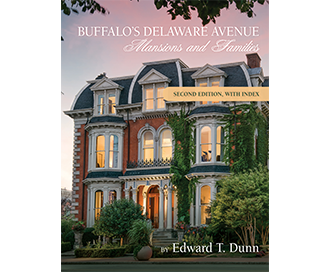
With a robust, four-part, 32-page Index by Buffalo History Museum Assistant Librarian Amy Miller and an Introduction to the Second Edition by Buffalo History Museum Research Librarian Cynthia Van Ness, there is finally excellent access to this encyclopedic book’s amazing contents, street by street, family by family. The decades between the Mexican War and the beginning of World War I revolutionized America’s cities. Industrial prosperity produced an astonishing proliferation of capitalists and industrialists positioned to garner a disproportionate share of the profits. These noveau riches erected magnificent mansions, creating aristocratic residential thoroughfares in cities like Chicago, Boston and Buffalo, of which Delaware Avenue was surely among the most magnificent. Classic Delaware Avenue ran two and a quarter miles, from Niagara Square to Chapin – now Gates – Circle. Four generations of inter-Avenue marriages created a closely knit, complicated cousinry. Encyclopedic in scope, Buffalo’s Delaware Avenue: Mansions and Families is an immense book of facts that covers Buffalo’s grandest Avenue. Discover the tales behind these mansions and their illustrious families.
A well-preserved creation of America’s most celebrated landscape architect, Point Chautauqua’s 1875 Frederick Law Olmsted design is listed on the National Register of Historic Places. Among Olmsted’s many works, Point Chautauqua stands alone. Only here did the master find a physical setting that conformed to his aesthetic ideal. Moreover, this was his only design for a religious community. Frederick Law Olmsted’s Point Chautauqua richly exhibits Olmsted’s design principles, making it a perfect example of historic landscape architecture that is also a living, working community, and a rewarding laboratory for students of historic landscape architecture.
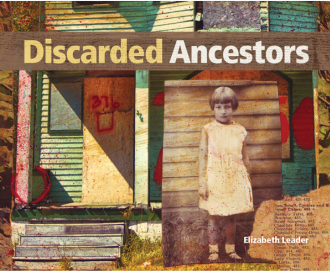
Treasure lives amidst the rubble of lost neighborhoods. Mixed-media artist Elizabeth Leader found a discarded family album and transformed it into collages that capture the rise and fall of the Rust Belt, honoring the immigrants and refugees who built America. Discarded Ancestors is a unique and beautiful coffee table book that poignantly illustrates a vibrant era in the nation’s industrial past couched within its decline.
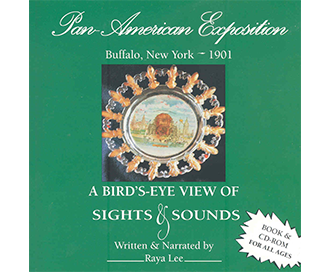
This illustrated, informative booklet offers a bird’s-eye view of the Pan-American Exposition. Review the grounds which were located between what today are Elmwood and Delaware avenues. See the sights that were seen then, when electricity was a novelty. And hear the sounds of the Pan-Am. A delightful CD of the music of the Pan-American Exposition as it was played by John Philip Sousa in 1901 – on player piano rolls – is tucked inside a colorful back pocket. A great way to experience a momentous event, when Buffalo came to be known as the City of Light.
Stories of the lives, accomplishments, and contributions of four prominent Polish-Americans: Rev. John Pitass, known as the father of Buffalo’s Polonia; Joseph Eustace Fronczak, a prominent Polonian architect; Mother Mary Simplicita Nehring, considered a model of faith in her time; and Ignacy Jan Paderewski’s enduring friendship with Joseph Eustace Fronczak. Together, these compelling stories paint a vivid picture of Buffalo’s Polonian legacy.


Reviews
There are no reviews yet.